
Featured

13 Jul 2026
9 min read
Noor Kaur
How to Identify Undervalued Stocks Before the Market Discovers Them

Every investor dreams of buying a great business before everyone else notices it. That is exactly what happens when you find undervalued stocks early. These are shares trading below their real worth, often because the broader stock market has overlooked them, misread short-term news, or simply hasn't caught up with the company's actual performance yet.
The challenge is that spotting undervalued stocks isn't about guessing or following stock tips. It is about reading financial numbers carefully, understanding a company's intrinsic value, and having the patience to wait while the rest of the market figures it out. In this blog, we will walk through simple, practical ways to identify undervalued stocks before they become popular picks.
What Do We Mean by Undervalued Stocks?
In simple words, undervalued stocks are shares of a company that are trading at a price lower than what the business is actually worth. This "real worth" is called intrinsic value, and it is based on factors like earnings, assets, cash flow, and future growth potential.
A stock can become undervalued for several reasons:
Temporary bad news or weak quarterly results
Sector-wide pessimism that drags down good companies along with weak ones
Low investor attention, especially in small and mid-cap companies
General market corrections that punish even fundamentally strong businesses
When the gap between price and intrinsic value is wide enough, patient investors get a chance to buy quality businesses at a discount.
Why Hunting for Undervalued Stocks Makes Sense:
Buying undervalued stocks is one of the oldest and most respected approaches in investing. Instead of chasing momentum, you are buying based on facts and numbers. Over time, as the company performs well and more investors recognise its intrinsic value, the share price tends to move closer to where it should be.
This way of doing things is better for people who're patient. People often get excited about stocks that're popular right now. Stocks that are not popular can be really good in the long run. These undervalued stocks often outperform over the long term. Give you more money over time. This happens when the market realizes how good these undervalued stocks really are.
Key Metrics to Identify Undervalued Stocks:
You don't need complicated formulas to start. A few core ratios can help you screen for undervalued stocks effectively.
Price-to-Earnings (P/E) Ratio
The P/E ratio compares a company's share price to its earnings per share. A company trading at a lower P/E than its industry peers, despite having similar or better growth, could be undervalued. Always compare P/E within the same sector, since a fair P/E for an IT company looks very different from a fair P/E for a manufacturing business.
Price-to-Book
The Price-to-Book ratio is a way to compare a company's stock price to what its assets are worth.
If the Price-to-Book ratio is low, it might mean the stock is cheaper than it should be.
The Price-to-Book ratio is really useful for companies, like banks and companies that make things.
PEG Ratio
The PEG ratio compares a company's stock price to its expected earnings growth. A low PEG ratio may suggest that the stock is undervalued and has good growth potential.
Free Cash Flow (FCF)
Free Cash Flow is the money a company has left after paying its operating and business expenses. Strong Free Cash Flow shows that a company is financially healthy and has money available for growth, debt repayment, or dividends.
Debt-to-Equity Ratio
Lower debt levels mean lower financial risk. Undervalued stocks with manageable debt are generally safer bets than cheap stocks loaded with liabilities.
Return on Equity (ROE)
A consistently high ROE shows that a company uses shareholder money efficiently. Pairing a high ROE with a low valuation is often a strong sign of genuinely undervalued stocks rather than businesses that are simply struggling.
A Simple Process to Spot Undervalued Stocks Early:
Finding undervalued stocks early is a process. You need to follow a plan to find stocks before everyone else does.
Find companies with low price-to-earnings ratios, low price-to-book ratios, and a good return on equity compared to other companies in the same sector.
Then read the four to eight quarterly reports to see if the company is really getting better.
Try to figure out why the stock price is dropping. If it is because of something in the news, the price will probably go up faster than if the company has serious business problems.
Look at the numbers for the company. Compare them to at least two or three other similar companies.
Calculate the intrinsic value of the company using simple methods like looking at the cash flow or comparing it to similar companies.
Keep an eye on how much of the company the owners have. If they are buying more, it means they think the company is doing well.
You have to be patient. It can take the market some time, maybe months or even years, to see the value of undervalued stocks that you have already found.
Common Mistakes to Avoid:
You should not think that every stock that is cheap is a deal. Some companies that seem cheap are actually not good to buy because they have problems. These problems can be that people do not want their products anymore or the people in charge are making poor decisions. Just because a stock is cheap does not mean it is an investment. You need to find out if the price is low because people are just being pessimistic or if the company really has issues. Always remember that undervalued stocks are not the same as cheap stocks. Undervalued stocks are the ones that are really worth buying — the ones trading below their intrinsic value for temporary reasons, not permanent ones.
How mastertrust Can Support Your Research:
mastertrust can really help you with your research. To find undervalued stocks, you need data, research, and the right tools to trade. mastertrust gives investors research reports, tools to find stocks, and insights into the market. These things make it easy to look at how companies are doing financially, track how they are performing, and compare their intrinsic value against what they are currently trading at. If you are new to investing in undervalued stocks or you have been doing it for a time and just want to make your strategy better, mastertrust can help. You can get a lot of support from mastertrust at mastertrust.co.in. This support can make finding undervalued stocks a more organised process and a lot less stressful.
Final Thoughts:
Finding undervalued stocks before everyone else does is not just about being lucky. It is about doing your homework, knowing what a business is really worth, and not doing what everyone else is doing. The difference between what a stock costs and its true intrinsic value will not close right away, but if you keep an eye on it all the time, you will be ahead of people who only buy a stock when it is already popular again. Look at the basics of a stock, wait it out. Make decisions based on what you have learned, not on what other people are saying about the stock market and stocks.
Frequently Asked Questions (FAQs):
1. What are undervalued stocks?
Undervalued stocks are shares that are trading at a price that's lower than what they are really worth. This happens when people's feelings about the market change for a while, or when there is some not-so-good news for a short time, or when not many investors are paying attention to undervalued stocks.
2. How do I know if a stock is genuinely undervalued?
Compare ratios like P/E, P/B, and PEG against industry peers, and study whether the company's fundamentals are improving despite a falling price. If the current price is significantly below the intrinsic value you calculate, the stock may be genuinely undervalued.
3. What is a value trap?
A value trap is when a stock seems cheap, but its fundamentals are actually getting worse. This makes it a bad choice for a long-term investment, even if it looks good on paper. The stock's low price might look like a discount, but it has no real intrinsic value growth backing it up.
4. How long does it take for undervalued stocks to recover?
There is no fixed timeline. It can take a few quarters or several years for the market to recognise a company's true intrinsic value.
5. Can beginners invest in undervalued stocks?
Yes, but beginners should rely on basic ratios, sector comparisons, and reliable research tools before making investment decisions.
6. Where can I research undervalued stocks in India?
Platforms like mastertrust offer research reports and screening tools that help investors analyse company fundamentals and estimate intrinsic value before investing.
Share on:


RelatedBlogs

14 Oct 2026
Featured
Read MoreWhat Is a Butterfly Spread and When Is It Used?
Learn what a butterfly spread is in options trading, how it works in f&o trading, and when traders typically use this strategy.

12 Oct 2026
Featured
Read MoreHow PMS Portfolios Are Benchmarked and What "Alpha" Really Means for Investors
Confused about how PMS portfolios are benchmarked and what alpha actually means? Here's a plain-English breakdown before you invest.

22 Aug 2026
Featured
Read MoreTrading App Comparison: What Beginners vs Pros Should Look For
Choosing a trading app? See what beginners and pros should check in a trading platform, from charts to order speed, before you start trading.
22 Aug 2026
Featured
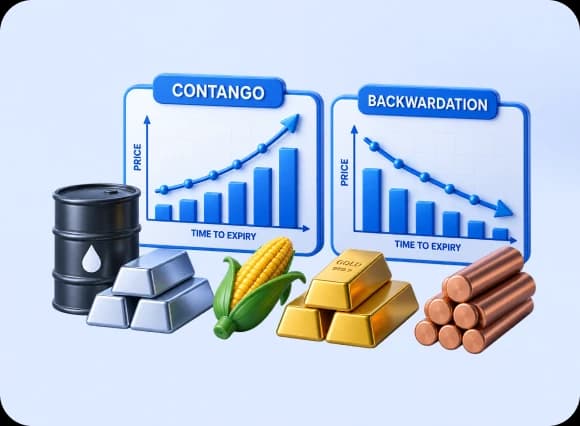
Read MoreContango vs Backwardation in Commodity Futures Explained
Understand contango and backwardation in commodity futures, what drives them, and how traders use these signals to plan smarter trades.
Subscribe for Newsletter
Share on:
Open a Free Demat Account with us only in few minutes
By processing, you agree terms & conditions.

Open a Demat Account in 5 minutes !

Step 01
Click on the button below to open your new account.

Step 02
Fill out some basic details to get started.

Step 03
Upload your documents to verify your account.

Step 04
Start trading within just 24 hours of registration.
Commonly Asked Questions
It is simple and paperless. Visit our website, enter your mobile number, and complete the e-KYC process to open a demat account instantly. Our digital onboarding ensures you can start investing in minutes without physical paperwork.
We unify speed, stability, and advanced tools in one place. Unlike basic apps, our ecosystem offers deep analytics, algo capabilities, and expert support, making us the preferred platform for trading for both beginners and professionals.
A demat account acts like digital storage for your shares and securities, while a trading account is the interface used to buy and sell them. At mastertrust, you get both linked seamlessly for a smooth investment experience.
With over 41+ years of market presence, we combine trust with modern technology. Our transparent pricing, personalised guidance, and regulatory compliance make us one of the preferred stock brokers in India for secure wealth creation.

Slide 1 of 1