
Featured

30 Mar 2026
8 min read
Noor Kaur
Long Term vs Short Term Trading Strategies: Which Is Better?

Key Takeaways:
Long term investing involves holding stocks for at least more than one year to gain benefits.
Short term trading focuses on earning profits from frequent price fluctuations.
Long term strategies depend on business fundamentals and economic growth.
Market timing drives short term trading, requiring strict discipline.
A combination of strategies provides stability and allows selective trading opportunities.
Introduction:
Trading strategies are something that investors shouldn’t ignore if they are seriously planning to build wealth from the stock market with a learning mindset. It is the responsibility of investors to ensure that the chosen strategies must produce reliable results and be applied consistently to their portfolio. There are essentially two investment strategies: long term and short term strategies. These investment strategies correspond to different financial needs. They require different risk appetites, skill levels and available time. Choosing a strategy that fits their requirements allows them to act logically based on the criteria they have set for their trading strategy and to stay away from trading based on emotions.
A trading strategy determines the following:
Profit potential
The risk exposure associated with it
Time commitment
Investors must be clear about these three things and choose a strategy accordingly.
This blog clearly explains long term investing and short term trading strategies, share popular approaches and discusses their pros and cons.
What is Long Term Trading or Long Term Investing?
Long term investing, as the name suggests, it involves investing in the assets for a longer period. Long term trading and long term investing are commonly used interchangeably, which basically means purchasing stocks and then holding them for a long duration of time, likely from years to decades. These investors are known as shareholders.
With the expansion of businesses, shareholders make gains from these growth cycles, without stressing much like short term trading. They should focus only on financial research on the company they want to invest in.
Long term investors look for sound businesses that have strong financials, a strong competitive position, and promise to grow in the future. This strategy is one commonly followed by long term investors, such as Warren Buffett, who encourages buying good companies and holding them long term.
Features of Long Term Investing:
Long term investors select companies that have healthy finances, reliable business models, and consistent long term growth. The features of long term investing clarify the concept more, such as:
Focuses on patience, discipline, and fundamental performance of everyday market actions.
Has a less active trading schedule, which keeps down transaction fees and reduce emotional behaviour during high volatility.
It emphasizes fundamental analysis of companies’ financial well being, their management and the industry it operates in.
It stays stable when the market is unstable. Long term investors understand that real wealth is built steadily over a period of time.
How Compounding Helps Long Term Investors Grow Wealth?
One of the greatest and core benefits of long term investment is compounding. This is one of the main reasons why people invest. Compounding happens when the invested money grows and the profits earned are reinvested. In the future, returns are earned on both the invested money and the profits. For instance, if a person invests Rs.1000 and earns Rs.100 then total income is Rs. 1,100. Next time, returns will be calculated on Rs.1,100 and not Rs. 1,000. Compounding increases the value of investments which requires consistency and patience from the investor.
What is Short Term Trading?
A short term strategy is like a thrilling game, where investors seek to earn profits amidst frequent price fluctuations. It has shorter time frames, ranging from days to weeks to months. The primary goal of short term trading is to earn profits in high market volatility and short term price trends. Traders constantly monitor price charts, keep themselves updated with market news and technical indicators to identify potential opportunities. An investor must practice quick decision making with active participation.
Common Types of Short Term Trading Strategies:
The common types of short term trading strategies, differing in time horizons and techniques:
Day Trading - Buying and selling of securities within the same day.
Swing Trading - Catches price movements happening over several days or weeks.
Scalping - Execution of multiple trades in a single day.
Momentum Trading - High demand stocks that move in one direction and trades are executed in that momentum.
The skills required to succeed in short term trading:
Analysing technical charts, resistance and support levels critically
Managing risks using stop loss levels and managing capital in each trade
Emotional discipline and quick ability to make decisions
Stay consistent, patient and follow a trading plan.
Long Term vs Short Term Trading: Key Differences
FACTORS | LONG TERM TRADING | SHORT TERM TRADING |
Time Horizon | Holds stocks for years or decades
| Positions are held for mins, hours, days, weeks |
Risk Level | Low | High
|
Analysis methods | Fundamental- company financials, long term growth | Technical - charts, price trends, indicators analysis
|
Trading costs | Low brokerage and transaction costs | High brokerage and transaction costs
|
Long Term vs Short Term Trading: Which is more profitable?
However, there is no single answer to the best and profitable approach. It mainly depends on the investor’s skills, strategy, risk tolerance, and market conditions.
Investors who want stability and consistent wealth building then they should choose long term investing strategies. On the opposite, those who want to earn from price fluctuations and is ready to actively participate, choose short term trading investment.
Both can be profitable depending on the interests, abilities and time commitment of investors. It doesn’t involve any superiority or inferiority in strategies.
Conclusion:
There is no single strategy that can deliver maximum profits for everyone. Each approach suits different investors based on their goals. It is important to be self aware of what you want from the stock market, how much time you can commit, and whether you can manage emotions and think rationally. Investors can also combine long term and short term approaches for stability and near term opportunities, often managed more efficiently with a trading app.
Frequently Asked Questions (FAQs):
1. What are the most popular long term investing strategies?
The most common long term investing strategies include buy and hold investing, value investing, and growth investing.
2. What are the common mistakes beginners make in trading strategies?
Trading without a clear strategy
Reacting emotionally to market fluctuations
Overtrading
Ignoring risk management
Following market hype without proper research
3. How long should stocks be held for long term investing?
Stocks are typically held for at least 3-5 years in long term investing and many investors hold quality companies for 10 years or more to fully benefit from business growth, dividends, and compounding returns.
4. Which trading strategy requires less time?
Long term investing requires less time as it doesn’t involve constant monitoring of the market.
5. What are the risks of long-term investing?
The risks of long term investing are:
Market downturns
Economic changes
Company specific problems
Periods of volatility
6. What is growth investing in the stock market?
Growth investing focuses on companies expected to grow faster than the overall market. Investors look for businesses with strong revenue growth, innovation, and high future potential, even if their current stock prices appear relatively high.
7. Which trading strategy is better for beginners?
Long term investing strategy is better for beginners as it is less risky and returns are compounded over time.
8. Can Long-Term Investing & Short Term Trading be combined?
Yes, many investors combine both strategies. They keep a core portfolio of long term investments for wealth creation while using a small portion of capital for short term trading to take advantage of market opportunities.
Share on:


RelatedBlogs

14 Oct 2026
Featured
Read MoreWhat Is a Butterfly Spread and When Is It Used?
Learn what a butterfly spread is in options trading, how it works in f&o trading, and when traders typically use this strategy.

12 Oct 2026
Featured
Read MoreHow PMS Portfolios Are Benchmarked and What "Alpha" Really Means for Investors
Confused about how PMS portfolios are benchmarked and what alpha actually means? Here's a plain-English breakdown before you invest.

22 Aug 2026
Featured
Read MoreTrading App Comparison: What Beginners vs Pros Should Look For
Choosing a trading app? See what beginners and pros should check in a trading platform, from charts to order speed, before you start trading.
22 Aug 2026
Featured
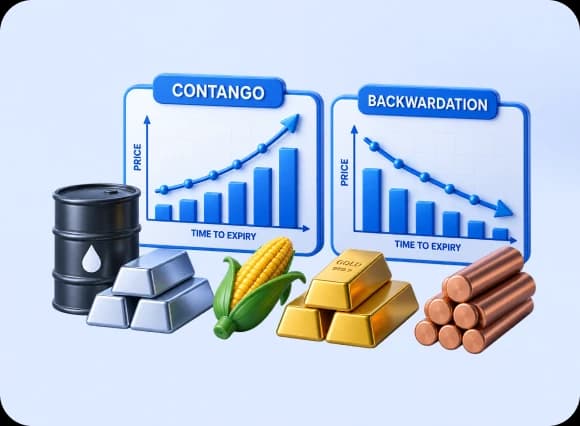
Read MoreContango vs Backwardation in Commodity Futures Explained
Understand contango and backwardation in commodity futures, what drives them, and how traders use these signals to plan smarter trades.
Subscribe for Newsletter
Share on:
Open a Free Demat Account with us only in few minutes
By processing, you agree terms & conditions.

Open a Demat Account in 5 minutes !

Step 01
Click on the button below to open your new account.

Step 02
Fill out some basic details to get started.

Step 03
Upload your documents to verify your account.

Step 04
Start trading within just 24 hours of registration.
Commonly Asked Questions
It is simple and paperless. Visit our website, enter your mobile number, and complete the e-KYC process to open a demat account instantly. Our digital onboarding ensures you can start investing in minutes without physical paperwork.
We unify speed, stability, and advanced tools in one place. Unlike basic apps, our ecosystem offers deep analytics, algo capabilities, and expert support, making us the preferred platform for trading for both beginners and professionals.
A demat account acts like digital storage for your shares and securities, while a trading account is the interface used to buy and sell them. At mastertrust, you get both linked seamlessly for a smooth investment experience.
With over 41+ years of market presence, we combine trust with modern technology. Our transparent pricing, personalised guidance, and regulatory compliance make us one of the preferred stock brokers in India for secure wealth creation.

Slide 1 of 1