
Featured

2 Aug 2025
9 min read
Noor Kaur
What is High-Frequency Trading? Everything You Need To Know
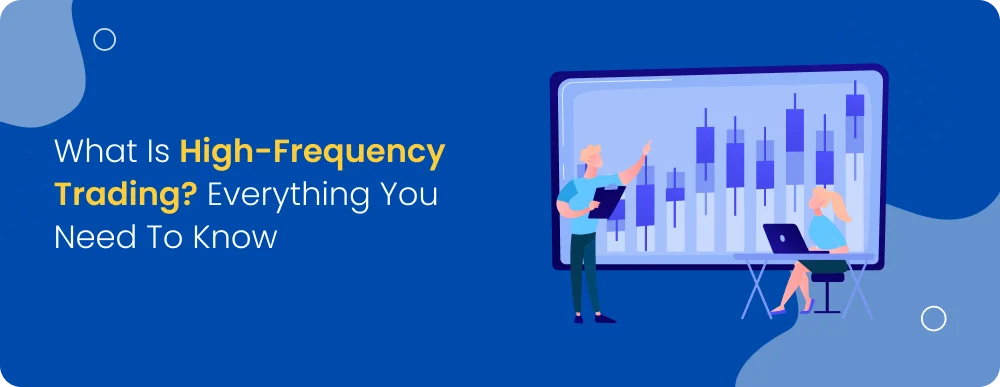
High-Frequency Trading (HFT) is a specialised branch of algorithmic trading that uses ultra–high-speed systems to execute thousands—or even millions—of orders within microseconds. It relies on advanced hardware, co-location servers, and sophisticated HFT algorithms to spot and act on tiny price inefficiencies across markets.
Instruments like equities, futures, options, and even global indices are heavily influenced by HFT activity, where trades happen faster than human reaction time. While the profit per order is extremely small, the massive trade volume and unmatched speed make HFT a dominant force in modern financial markets. Through strategies such as latency arbitrage, statistical arbitrage, and market making, HFT continues to reshape how markets operate at the microsecond level.
What is High-Frequency Trading (HFT)?
HFT full form is High-Frequency Trading is a specialised form of algorithmic trading that uses powerful computers, low-latency networks, and advanced high-frequency trading algorithms to place and manage thousands of orders in fractions of a second. The goal is to exploit very short-lived price inefficiencies—sometimes lasting just milliseconds—for small profits that add up through massive trade volumes.
HFT is fully automated and relies on speed, precision, and proximity to exchanges. Most trades are placed and cancelled within microseconds, and positions are rarely held for more than a few seconds.
Suggested Read: Algo Trading for Retail Investors: A Beginner's Guide to Smart Investments
How High-Frequency Trading Works in Real Markets
HFT operates on a mix of real-time data feeds, fast hardware, and smart order-routing logic. Here’s a step-by-step breakdown:
Market Data Ingestion: HFT systems receive Level 1 and Level 2 data from exchanges. This includes price quotes, order book depth, and recent trade executions.
Microsecond-Level Analysis: Algorithms process this data instantly to detect opportunities such as price gaps, arbitrage windows, or order book imbalances.
Decision-Making Engine: The system uses pre-programmed logic and sometimes machine learning models for algorithmic trading to decide whether to place a trade.
Trade Execution: If the condition is met, the system sends orders through low-latency APIs—often from co-location servers placed near exchange infrastructure—to execute trades in microseconds.
Order Cancellation or Modification: If an opportunity disappears or a rival executes first, the order is cancelled or adjusted. Over 90% of HFT orders are cancelled before execution.
Post-Trade Risk Monitoring: Real-time systems monitor all trades for exposure, compliance, and profit/loss. This is a critical part of regulatory oversight, especially in HFT in stock markets regulated by SEBI.
Top Strategies Used in HFT
HFT firms use strategies that rely on speed, market structure, and advanced modelling. Here are some of the most common:
Statistical Arbitrage: Uses mathematical models to identify pricing differences between related securities. The high-frequency trading algorithm quickly trades to profit from small deviations.
Market Making: HFT firms place simultaneous buy and sell orders to provide liquidity. They profit from the spread between bid and ask prices, while constantly updating quotes.
Latency Arbitrage: Exploits small time delays in how different market participants receive and act on data. HFT systems with faster access can trade before others respond.
Technology Behind HFT
High-Frequency Trading (HFT) is powered by advanced infrastructure designed for speed and precision. The goal is to reduce latency (the delay between order placement and execution) to microsecond levels. Here are the core components:
Co-location Servers: HFT firms pay to place their servers inside or near exchange data centres to reduce physical distance and time delay.
FPGA & Custom Hardware: Field-Programmable Gate Arrays (FPGAs) process market data faster than regular CPUs, allowing decisions in nanoseconds.
Microwave and Millimetre-Wave Networks: These transmit data faster than fibre optics over short distances, giving firms an edge in price discovery.
Smart Order Routers: Algorithms select the best exchange or venue for order execution in real time.
Low Latency APIs: These allow direct, high-speed communication between trading systems and exchange servers.
Impact of HFT on Retail Investors and Traditional Traders
The presence of HFT has reshaped how markets behave, especially for slower participants:
Tighter Spreads, Higher Liquidity: HFT-driven market making often narrows bid-ask spreads, making trades cheaper for retail investors.
Order Anticipation: Some HFT strategies can anticipate large orders and trade ahead—this may lead to worse pricing for traditional investors.
Increased Volatility in Certain Conditions: During market stress, HFT systems may pull back or trigger rapid order cancellations, increasing short-term volatility.
Unequal Access: While retail algo trading in Python is possible, retail traders don’t have access to the same infrastructure or data speed, putting them at a disadvantage in high-speed trading environments.
The Future of High-Frequency Trading
HFT is evolving rapidly, shaped by technology, regulation, and competition:
Rise of AI in HFT: AI and machine learning in algorithmic trading are being used to detect new signals, adapt to market changes, and manage execution more intelligently.
Stronger Regulation: Regulators like SEBI are tightening rules around HFT in stock markets, focusing on fair access, surveillance, and preventing manipulation.
Edge Computing and Quantum Experiments: Firms are exploring edge computing and early-stage quantum systems to reduce latency further and process data faster.
Global Expansion: Emerging markets are upgrading infrastructure, allowing more HFT strategies to be deployed outside developed economies.
Conclusion
HFT combines technology, data, and automation to trade at speeds far beyond traditional systems. It offers liquidity and tighter spreads but also raises concerns around fairness, transparency, and access.
Whether you’re a retail trader, technologist, or regulator, understanding what HFT is, how it works, and the HFT strategies involved is key to navigating today’s markets. As the industry moves towards AI algorithmic trading and more advanced infrastructure, HFT will continue to evolve, balancing innovation with increasing scrutiny.
FAQs
How is HFT different from algo trading?
High-frequency trading is a specialised subset of algorithmic trading. While both rely on automation, HFT focuses on executing thousands of trades in microseconds using ultra-low-latency systems. In contrast, algorithmic trading covers a wider range of strategies, many of which do not require high speed or infrastructure. HFT strategies are built for speed, not just logic.
Can individual investors participate in HFT?
Technically, yes—but it's not practical. What is HFT in real terms? It involves expensive co-location servers, high-speed data feeds, and low-latency networks. These are far beyond what individual investors can access. Most high-frequency trading algorithms are developed and run by institutional firms with significant capital and infrastructure.
Is high-frequency trading legal?
Yes, high-frequency trading is legal in most major markets, including India. However, it is heavily regulated. SEBI monitors HFT in the stock market closely to prevent manipulation. All HFT orders must be tagged, and exchanges run surveillance to catch activities like spoofing or layering.
Is HFT profitable in the long run?
HFT can be profitable—but only for firms that stay ahead in speed, strategy, and compliance. Margins are thin, competition is high, and infrastructure costs are ongoing. Profitable HFT strategies require constant optimisation and large trading volumes. Without scale or technical edge, long-term profitability becomes difficult.
Which markets support high-frequency trading?
HFT operates in several global markets, including equities, derivatives, forex, and commodities. HFT in stock markets is common on major exchanges like NSE, BSE, NYSE, and NASDAQ—especially where co-location and direct market access are available.
Is AI used in high-frequency trading?
Yes. Many firms now use AI and machine learning to improve their high-frequency trading algorithms. These systems analyse real-time order books, price patterns, and news sentiment to make split-second decisions. However, AI models in HFT must be fast, efficient, and regularly retrained to stay effective.
Share on:


RelatedBlogs
14 Oct 2026
Featured
Read MoreWhat Is a Butterfly Spread and When Is It Used?
Learn what a butterfly spread is in options trading, how it works in f&o trading, and when traders typically use this strategy.
12 Oct 2026
Featured
Read MoreHow PMS Portfolios Are Benchmarked and What "Alpha" Really Means for Investors
Confused about how PMS portfolios are benchmarked and what alpha actually means? Here's a plain-English breakdown before you invest.
22 Aug 2026
Featured
Read MoreTrading App Comparison: What Beginners vs Pros Should Look For
Choosing a trading app? See what beginners and pros should check in a trading platform, from charts to order speed, before you start trading.
22 Aug 2026
Featured
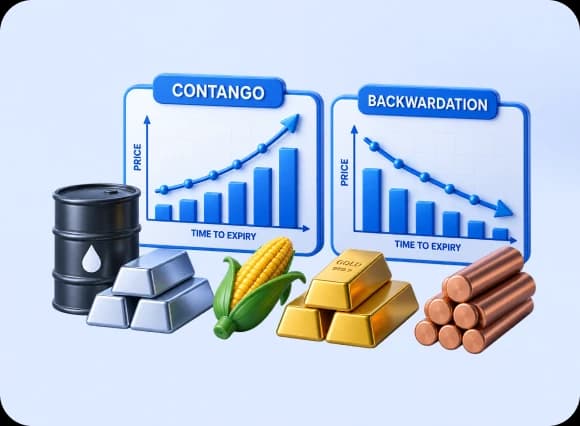
Read MoreContango vs Backwardation in Commodity Futures Explained
Understand contango and backwardation in commodity futures, what drives them, and how traders use these signals to plan smarter trades.
Subscribe for Newsletter
Share on:
Open a Free Demat Account with us only in few minutes
By processing, you agree terms & conditions.

Open a Demat Account in 5 minutes !

Step 01
Click on the button below to open your new account.

Step 02
Fill out some basic details to get started.

Step 03
Upload your documents to verify your account.

Step 04
Start trading within just 24 hours of registration.
Commonly Asked Questions
It is simple and paperless. Visit our website, enter your mobile number, and complete the e-KYC process to open a demat account instantly. Our digital onboarding ensures you can start investing in minutes without physical paperwork.
We unify speed, stability, and advanced tools in one place. Unlike basic apps, our ecosystem offers deep analytics, algo capabilities, and expert support, making us the preferred platform for trading for both beginners and professionals.
A demat account acts like digital storage for your shares and securities, while a trading account is the interface used to buy and sell them. At mastertrust, you get both linked seamlessly for a smooth investment experience.
With over 41+ years of market presence, we combine trust with modern technology. Our transparent pricing, personalised guidance, and regulatory compliance make us one of the preferred stock brokers in India for secure wealth creation.

Slide 1 of 1