
Investing

29 Jul 2026
6 min read
Team mastertrust
Why Natural Gas Prices Are Rising in 2026 and What It Means for MCX Traders

Key Takeaways:
- Prices in 2026 are rising due to colder winter demand, brief production disruptions, and expanding LNG exports.
- Data centre and industrial electricity demand add a structural, less seasonal source of demand growth.
- MCX Natural Gas futures track NYMEX and USD/INR, so US weather data and rupee movement both affect your position.
- Wider volatility means margin and position sizing deserve extra attention right now.
- A flat ₹20 per order on the mastertrust mcx trading app keeps costs predictable while you trade commodities through this cycle.
If you have checked a natural gas chart lately, you've noticed the price isn't sitting still. Heating demand, tighter supply, and rising LNG exports have pushed prices up through 2026, and that volatility shows up directly on MCX. If you trade commodities, understanding what's driving this move matters more than watching the candle colours.This blog covers why natural gas prices are rising this year and what it means for MCX traders.
What Is Natural Gas Trading on MCX?
Natural gas trades on MCX as a futures contract, quoted in rupees per MMBtu. The standard contract is 1,250 MMBtu, with a 250 MMBtu mini contract for smaller exposure. The price tracks the NYMEX benchmark, adjusted for USD/INR, so a move in the US market shows up almost immediately. It's cash-settled, with no physical delivery.
Why Natural Gas Prices Are Rising in 2026:
The cold winter effect. In early 2026, US natural gas prices increased by about 10.9% year-over-year, mainly due to colder weather and higher electricity demand, reported Marketplace, based on information from the Labor Department.
Disruptions in gas production. Extreme winter weather led to a brief 3% decline in US natural gas production from December to January, according to the US Energy Information Administration (EIA). Production increased in February; however, the fall was enough to tighten the supply chain for several weeks.
Higher volumes of LNG exports. Increased volumes of LNG exports are highlighted as one of the fundamental factors in the EIA forecast for 2026, along with record domestic demand of nearly 91.4 Bcf/d.
Data centre demand. A growing share of new demand comes from data centres and industrial electricity use, a persistent new load rather than a seasonal spike.
Geopolitical pressure. Tensions affecting Middle East shipping routes have added a risk premium to global energy markets, though the US market is partly insulated by its own production.
These factors explain why the EIA and firms like Goldman Sachs expect Henry Hub prices to trend higher through the year, even as record US production keeps a ceiling on the pace.
What This Means for MCX Traders?
- Range expansion. The weather report and the EIA inventory report are the factors that drive the NYMEX price, and the volatility is directly translated to the MCX Natural Gas contract within the same day.
- Margin dependence. Greater volatility increases the margin requirement. Make sure you have adequate margin for any trades that you might place.
- Seasonality should not be ignored. There is demand for natural gas both in winter for heating purposes and in summer for cooling purposes.
- Currency plays a role. MCX pricing is linked to USD/INR, so a weaker rupee can push up the rupee price even without a change in the dollar price.
None of this means chasing every spike. Position sizing and stop-loss discipline matter more when the market reacts this fast to news.
Common Mistakes Traders Make in a Rising Market:
Making an entry just because there has been an increase in price levels, without first finding out if it was caused by weather conditions, supply, or export, is one common mistake that many people make. Another mistake is not considering the expiration date and waiting until settlement comes, even without an exit strategy.
How mastertrust Helps You Trade Commodities:
mastertrust gives you a direct way to act on moves like this. Through the mastertrust MCX trading app, you can track live MCX Natural Gas prices, place orders, and manage positions from one screen, on the standard or mini contract.
Mastertrust offers a uniform charge of ₹20 for each transaction irrespective of whether it is an intraday, F&O, or equity trade, thus ensuring that you do not have to bear unpredictable charges. There is also no commission on any percentage basis affecting profits from natural gas.
New to commodities? Open a demat and trading account with mastertrust for research, margin details, and order tools built for MCX participants.
Final Thoughts:
Natural gas prices are increasing in 2026 due to weather, production, increased exports, and new sources of demand such as data centers, among others. The chance for MCX natural gas traders is here, and volatility will surely follow. EIA storage data, US weather, and USD-INR movements should be monitored closely.
Frequently Asked Questions (FAQs):
Q1. Why are natural gas prices rising in 2026?
Colder winter demand, brief production disruptions, rising LNG exports, and growing data centre demand.
Q2. How does the MCX Natural Gas contract work?
The standard contract is 1,250 MMBtu, with a 250 MMBtu mini contract. It's cash-settled and tracks NYMEX, adjusted for USD/INR
Q3. Is natural gas suited to trade commodities on MCX?
It's an actively traded, volatile contract that reacts fast to weather and supply data, so it suits disciplined risk management.
Q4. Does USD/INR affect MCX Natural Gas prices?
Yes. Since it's priced in rupees off a dollar benchmark, exchange rate moves shift the quoted price on their own.
Q5. What charges does mastertrust apply to MCX trades?
A flat ₹20 per order across intraday, F&O, and equity segments.
Share on:


RelatedBlogs
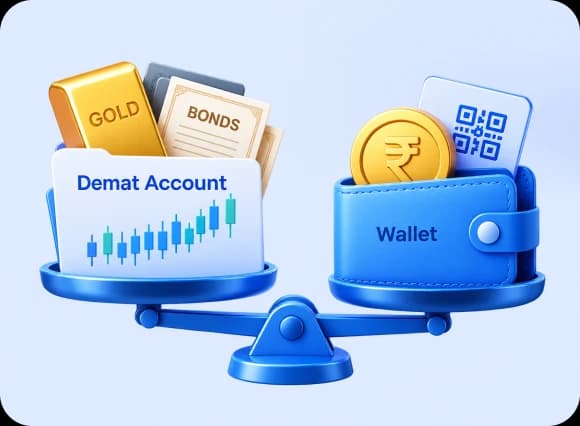
15 Oct 2026
Investing
Read MoreDemat Account vs Wallet: Where Should Your Digital Gold and Gold Investments Sit?
Comparing a demat account with a digital wallet for holding digital gold investments and bonds, and understanding where each option fits

15 Oct 2026
Investing
Read MoreWhat Documents Do You Actually Need to Open a Demat Account? PAN, Aadhaar, and e-Sign Explained
Confused about demat account opening paperwork? Here's what PAN, Aadhaar, and e-Sign do in demat account processing, explained simply.
14 Oct 2026
Investing
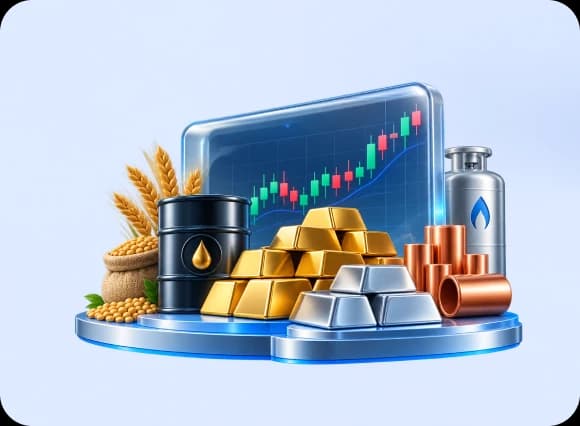
Read MoreHow to Read an MCX Commodity Chart: Key Differences From StocksCharts
Learn how to read an MCX commodity chart and where MCX trading differs from Stockscharts so that you can follow the commodity market with more confidence.
14 Oct 2026
Investing
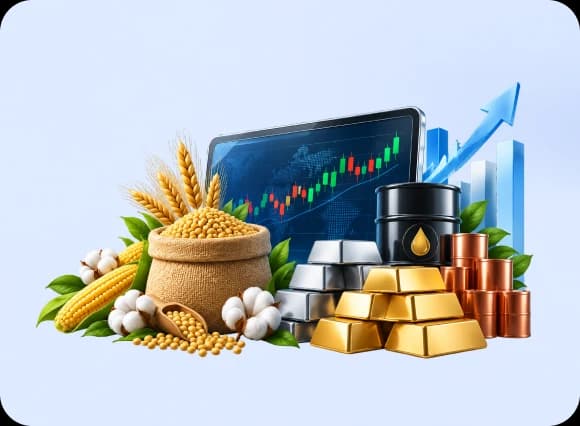
Read MoreSeasonal Trends in Commodity Trading: What History Tells Us About Agri and Metals
Explore seasonal trends in commodity trading across agri and metals, and learn how historical patterns help traders analyse seasonal price movements using a MCX trading app.
Subscribe for Newsletter
Share on:
Open a Free Demat Account with us only in few minutes
By processing, you agree terms & conditions.

Open a Demat Account in 5 minutes !

Step 01
Click on the button below to open your new account.

Step 02
Fill out some basic details to get started.

Step 03
Upload your documents to verify your account.

Step 04
Start trading within just 24 hours of registration.
Commonly Asked Questions
It is simple and paperless. Visit our website, enter your mobile number, and complete the e-KYC process to open a demat account instantly. Our digital onboarding ensures you can start investing in minutes without physical paperwork.
We unify speed, stability, and advanced tools in one place. Unlike basic apps, our ecosystem offers deep analytics, algo capabilities, and expert support, making us the preferred platform for trading for both beginners and professionals.
A demat account acts like digital storage for your shares and securities, while a trading account is the interface used to buy and sell them. At mastertrust, you get both linked seamlessly for a smooth investment experience.
With over 41+ years of market presence, we combine trust with modern technology. Our transparent pricing, personalised guidance, and regulatory compliance make us one of the preferred stock brokers in India for secure wealth creation.

Slide 1 of 1