
Investing

8 Dec 2025
14 min read
Noor Kaur
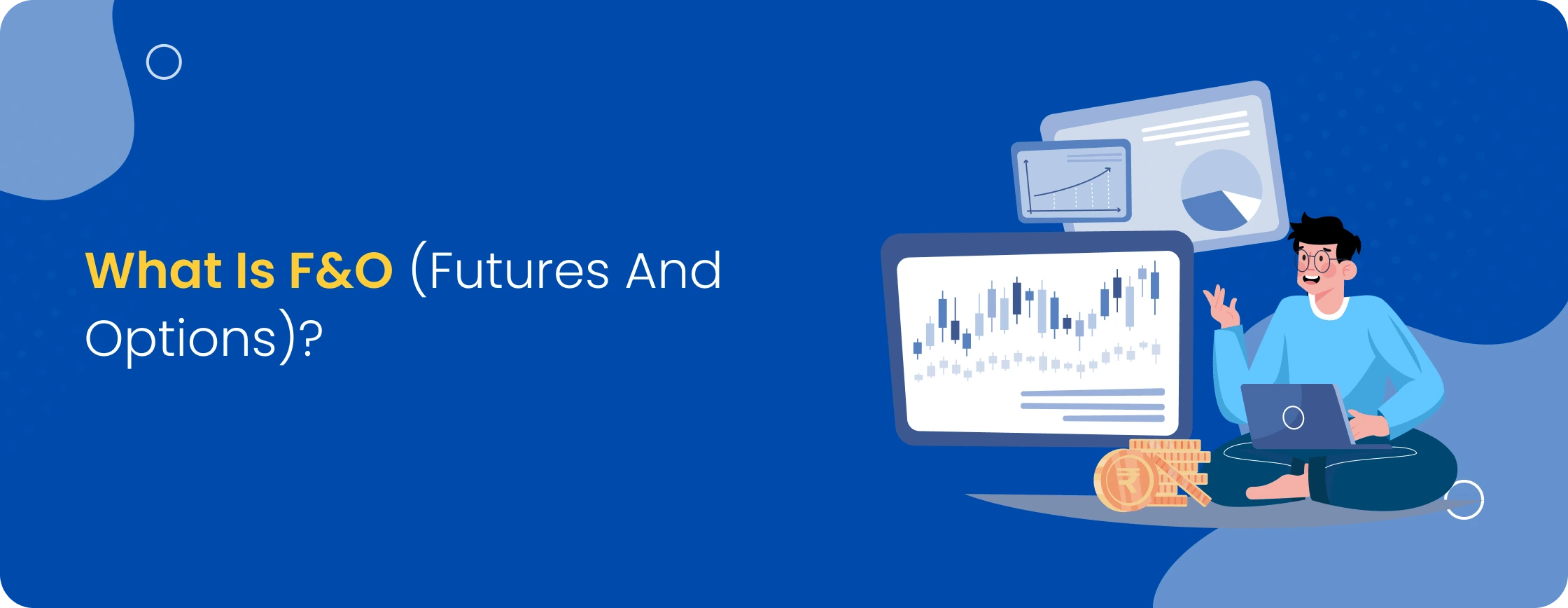
What is F&O (Futures and Options)?
Key Takeaways:
F&O trading involves buying/selling derivative contracts (futures and options) to speculate on or hedge against price movements without owning the underlying asset.
Futures require both parties to fulfill a contract, while options give buyers the right, but not the obligation, to trade at a set price before expiry.
Futures and options are used for hedging, speculation, and leveraging positions with lower capital than directly owning stocks or commodities.
Options have limited risk for buyers (only the premium paid), while futures have unlimited risk due to mandatory settlement.
-F&O trading is not ideal for beginners due to high risk and complexity; proper knowledge and risk management are essential for success.
What is F&O ?
Futures and Options—commonly known as F&O—are derivative contracts that allow traders to buy or sell an asset at a predetermined price on a future date. Unlike regular stock investing, where you simply buy and hold shares, F&O trading gives you the ability to hedge risks, speculate on price movements, use leverage, and build strategic positions, all without owning the underlying asset.
In this article, we’ll break down what futures and options are, how they work, the differences between them, key terms you must know, who should trade F&O, common mistakes to avoid, and how to start trading them confidently.
What are futures?
Futures are standardised contracts in which two parties agree to buy or sell an asset at a predetermined price on a specific future date. Unlike options, futures create an obligation for both the buyer and the seller. These contracts are traded on exchanges, have fixed lot sizes, and are commonly used for hedging, speculation, and managing price risk in stocks, indices, commodities, and currencies.
Types of Futures :
The most common types of futures traded in India include:
- Stock Futures: Contracts based on individual company shares.
- Index Futures: Futures based on market indices like NIFTY or BANK NIFTY.
- Commodity Futures: Contracts on commodities like crude oil, gold, natural gas, or agricultural products.
- Currency Futures: Contracts allowing traders to hedge or speculate on currency movements (USD/INR, EUR/INR, etc.).
What are the options?
Options are derivative contracts that give the buyer the right, but not the obligation, to buy or sell an underlying asset at a fixed strike price before a specified expiry date. Because buyers have a choice, options involve limited risk for buyers (only the premium paid) and higher responsibility for sellers, who take on the obligation. Options are widely used for hedging, speculation, income generation, and strategic positioning in the market.
Types of Options :
There are two primary types of options:
- Call Options: Give the buyer the right to buy the asset at a predetermined strike price. Used when expecting prices to rise.
- Put Options: Give the buyer the right to sell the asset at a predetermined strike price. Used when expecting prices to fall.
Suggested Read: What are the Types of Options Trading?
What is future and option trading?
Future and option trading—often called F&O trading—involves buying and selling derivative contracts whose value is based on an underlying asset such as stocks, indices, commodities, or currencies.
- In futures trading, both parties agree to buy or sell the asset at a fixed price on a future date, making it a binding obligation.
- In options trading, the buyer gets the right but not the obligation to buy or sell the asset at a predetermined price before expiry.
Together, futures and options help traders hedge risk, speculate on price movements, leverage positions, and manage portfolio exposure with far less capital than buying stocks directly. F&O trading is widely used by retail traders, institutions, and hedgers for flexibility and strategic advantages.
Difference Between Futures and Options :
Here’s a simple breakdown of how futures differ from options:
Feature | Futures | Options |
Obligation | Both buyer and seller must fulfil the contract | Buyer has a right, not an obligation; seller has the obligation |
Risk | Unlimited for both parties | Limited for buyers (premium only); higher for sellers |
Upfront Cost | No premium, but margin required | Buyers pay a premium; sellers post margins |
Profit/Loss | Moves 1:1 with asset price | Depends on asset price, volatility, and time decay |
Use Cases | Hedging, arbitrage, directional trading | Hedging, income strategies, leverage, volatility trading |
Settlement | Stock or cash settlement on expiry | Cash or physical settlement, depending on contract type |
F&O trading in the stock market :
F&O trading in the stock market allows traders to buy and sell futures and options contracts based on stocks and indices such as NIFTY, BANK NIFTY, and major individual companies.
These contracts help traders take leveraged positions, hedge existing portfolios, or speculate on price movements without owning the actual shares. Because F&O contracts are standardised, regulated, and offer multiple strategies, they are widely used by retail traders, active investors, and institutions to manage market exposure and amplify returns.
Futures and options in commodities:
Futures and options are also actively traded in the commodity market, covering assets like gold, crude oil, natural gas, metals, and agricultural products. Commodity futures allow hedgers—such as farmers, manufacturers, and exporters—to lock in prices and reduce risk, while traders use them to profit from price fluctuations.
Commodity options work similarly but give buyers a right, not an obligation, making them a lower-risk way to participate in commodity price movements. Platforms like MCX and NCDEX enable transparent, standardised commodity F&O trading across sectors.
Who Should Invest in Futures and Options?
Futures and options are best suited for investors who:
- Understand market behaviour and can manage risk effectively
- Want to hedge stock or commodity positions
- Aim to trade actively using leverage
- Wish to generate income through option-selling strategies
- Are comfortable with short-term market movements
F&O trading is not ideal for absolute beginners, ultra-conservative investors, or anyone without a clear risk-management plan. With the right knowledge and strategy, however, futures and options can be powerful tools for diversification, hedging, and high-reward opportunities.
Common Mistakes to Avoid in F&O Trading :
Many beginners lose money in futures and options because they underestimate risk and overestimate potential returns. Some of the most common mistakes include:
- Trading without understanding margins, leading to unexpected losses or auto-square-offs.
- Ignoring option Greeks which causes traders to misjudge how premiums move with volatility and time decay.
- Overleveraging positions, assuming markets will always move in their favour.
- Holding options too close to expiry, where time decay accelerates sharply.
- Trading only based on tips or rumours, instead of analysing price action, volatility, and liquidity.
F&O Trading with mastertrust :
mastertrust provides a cost-efficient and beginner-friendly platform for F&O trading across equities, indices, and commodities. With flat ₹20 brokerage per order, zero hidden fees, advanced charting tools, and real-time data, mastertrust makes futures and options trading accessible for both new and experienced traders.
The platform also supports option chain analysis, margin calculators, strategy tools, and API access, making it easier to plan trades, manage risk, and execute strategies with confidence. For traders who want transparency, low costs, and reliable execution, mastertrust stands out as one of India’s most efficient choices.
Explore All Trading Calculators
Conclusion :
Futures and options offer powerful ways to hedge risks, trade market movements, and build strategic positions with limited capital, but they require discipline, knowledge, and proper risk management using a reliable trading app.
Whether you are hedging a portfolio or actively trading, choosing the right platform, like mastertrust, can make your F&O journey smoother, more transparent, and more cost-effective.
Start online trading today at Best Online Trading Platforms
FAQs :
What is the meaning of F&O in trading?
F&O stands for Futures and Options, which are derivative contracts that allow traders to buy or sell an asset at a predetermined price on a future date.
Is F&O trading suitable for beginners?
F&O trading is not ideal for complete beginners due to leverage and higher risk, but beginners can participate safely after learning the basics, using small positions, and following strict risk management.
What is the difference between Futures and Options?
Futures create an obligation for both parties to buy or sell at a fixed price on expiry, while Options give the buyer a right but not an obligation to buy or sell; buyers risk only the premium, but futures traders face potentially unlimited gains or losses.
How can I start trading in Futures and Options?
To start F&O trading, you need a Demat account with F&O activation, margin money, and basic knowledge of contracts, strike prices, expiry, and risk. Platforms like mastertrust, Zerodha, and Upstox offer easy onboarding and F&O tools.
What are the risks in F&O trading?
F&O trading involves risks such as high leverage, rapid price swings, margin calls, time decay, and losses that can exceed your capital, especially for option sellers and futures traders.
What is the meaning of “expiry date” in F&O?
The expiry date is the last day on which a futures or options contract is valid; after expiry, the contract is settled either in cash or through physical delivery.
What is a strike price in options?
A strike price is the predetermined price at which an option buyer can buy (call) or sell (put) the underlying asset, making it a key factor in option pricing and moneyness.
What are the risks of options and futures trading?
Both futures and options carry risks:
- Futures: unlimited losses due to mandatory settlement.
- Options: buyers face time decay; sellers face high risk and margin requirements.
Share on:


RelatedBlogs

23 Oct 2026
Investing
Read MoreFake Trading Apps and Phishing: A Safety Checklist for Every Retail Investor
Learn how to recognize a fake trading application, steer clear of phishing schemes, and safeguard your investments with a quick safety guide to online trading.

23 Oct 2026
Investing
Read MoreCommodity Margins and Mark-to-Market Settlement on MCX Explained
Understand margins in commodity trading on MCX, how daily mark-to-market settlement works, and what happens when your margin falls short.

22 Oct 2026
Investing
Read MoreHow Rupee-Dollar Movement Affects Gold and Crude Prices on MCX
Learn how rupee-dollar movement affects gold and crude oil prices on MCX, and what it means for your commodity trading decisions.
22 Oct 2026
Investing
Read MoreCopper and Base Metals on MCX: What Drives Prices and How to Trade Them
Learn what drives copper and base metal prices on MCX, how futures contracts work, and what to check before you start commodity trading.
Subscribe for Newsletter
Share on:
Open a Free Demat Account with us only in few minutes
By processing, you agree terms & conditions.

Open a Demat Account in 5 minutes !

Step 01
Click on the button below to open your new account.

Step 02
Fill out some basic details to get started.

Step 03
Upload your documents to verify your account.

Step 04
Start trading within just 24 hours of registration.
Commonly Asked Questions
It is simple and paperless. Visit our website, enter your mobile number, and complete the e-KYC process to open a demat account instantly. Our digital onboarding ensures you can start investing in minutes without physical paperwork.
We unify speed, stability, and advanced tools in one place. Unlike basic apps, our ecosystem offers deep analytics, algo capabilities, and expert support, making us the preferred platform for trading for both beginners and professionals.
A demat account acts like digital storage for your shares and securities, while a trading account is the interface used to buy and sell them. At mastertrust, you get both linked seamlessly for a smooth investment experience.
With over 41+ years of market presence, we combine trust with modern technology. Our transparent pricing, personalised guidance, and regulatory compliance make us one of the preferred stock brokers in India for secure wealth creation.

Slide 1 of 1