
Demat

19 Dec 2025
10 min read
Noor Kaur
Understanding Market Volatility: What It Means for Your Demat Account Holdings ?
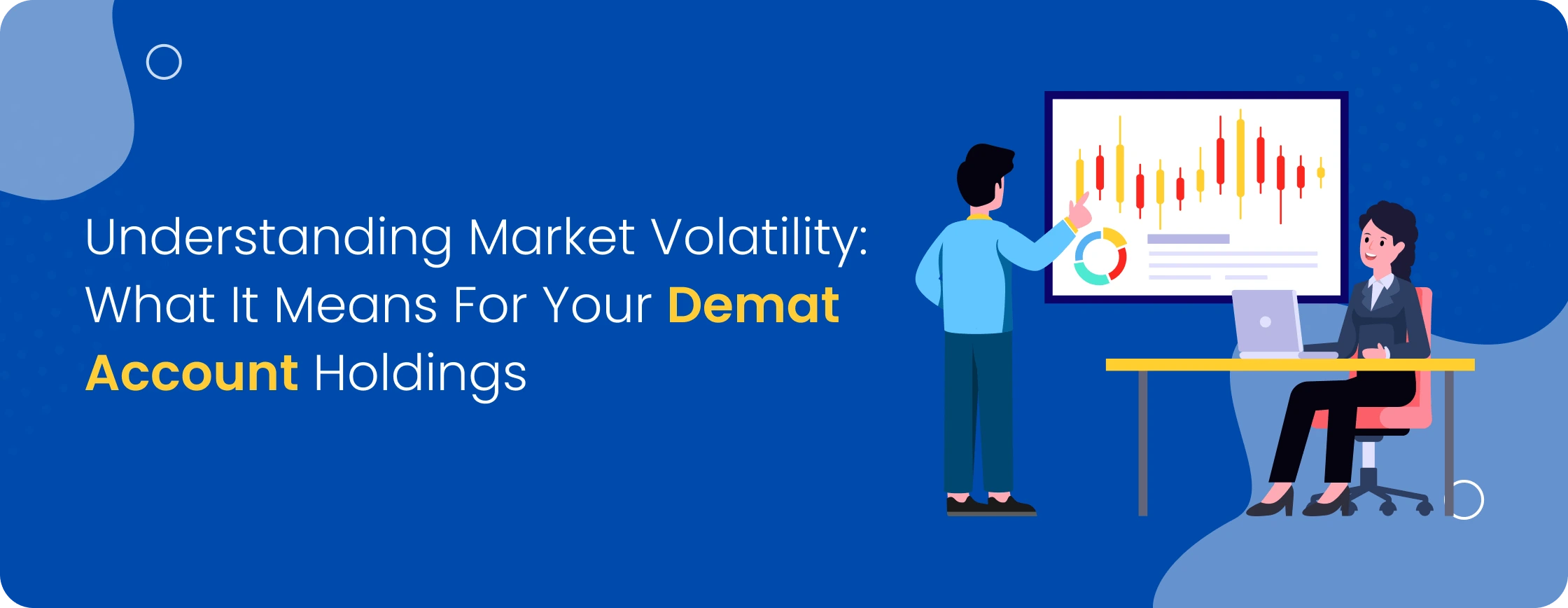
Stock prices never move in a straight line—they rise, fall, and sometimes swing wildly within minutes. This constant movement is what we call market volatility, and it directly affects the value of the shares stored in your Demat account. While volatility can feel unsettling, especially for beginners, it’s a natural part of the equity market and something every investor must learn to navigate.
In this article, we’ll explain what market volatility means, what causes it, how it impacts your Demat account holdings, the risks and opportunities it creates, and smart strategies to protect your portfolio during uncertain times.
Open Free Demat Account with Mastertrust Today!!
Key Takeaways:
- Market volatility is a natural part of investing and can cause rapid changes in the value of shares in your Demat account.
- Volatility presents both risks and opportunities—panic selling is harmful, but smart investors can benefit from price dips.
- Staying diversified across asset classes like equity, gold, and debt helps reduce risk during unstable markets.
- A disciplined approach—SIPs, research-backed decisions, and long-term focus—protects your portfolio from emotional mistakes.
- Volatility should not push investors away; with the right strategy, portfolios become more resilient through market cycles.
What Is Market Volatility?
Market volatility refers to how quickly and how widely prices fluctuate in the stock market. When prices move up and down frequently within a short time, the market is said to be highly volatile. Volatility is a natural part of the equity market, influenced by news, sentiment, and economic changes, and it creates both risks and opportunities for investors.
Common Causes of Market Volatility:
Several factors can trigger sudden price swings in the stock market, including:
- Global events like conflicts, pandemics, or policy changes
- Economic indicators such as inflation, GDP, or unemployment data
- Corporate actions—earnings announcements, mergers, or leadership changes
- Foreign investor activity—heavy FII buying or selling
- Interest rate decisions by the RBI or global banks
- Market sentiment and reaction to breaking news or rumours
How Market Volatility Impacts Your Demat Account Holdings:
Volatility directly affects the value of shares stored in your Demat account:
- Stock prices may swing sharply, creating sudden gains or losses.
- High volatility can lead to panic selling if emotions take over.
- Quality stocks often bounce back over time; hence, patience is important.
- If exposure is concentrated in high volatility stocks, risk increases.
Risks Associated With Volatile Markets:
When volatility rises, the risk of emotional and financial mistakes increases. Price swings become unpredictable, which can test investor discipline. Key risks include:
- Sudden portfolio value fluctuations that trigger fear-based selling
- Higher probability of losses in short-term or speculative positions
- Liquidity risk, especially in small and mid-cap stocks
- Misinformation-driven decisions during news-heavy market phases
- Overtrading in an attempt to “recover losses” quickly
Opportunities During Market Volatility:
While volatility feels uncomfortable, it opens doors for smart investors. When markets overreact, fundamentally strong companies may become undervalued. Opportunities include:
- Buying quality stocks at attractive prices
- Increasing equity exposure gradually using SIPs
- Rebalancing portfolios to align with long-term goals
- Earning premiums with options strategies (for experienced traders)
- Tax-loss harvesting during downturns, where applicable
How to Protect Your Demat Account Holdings During Volatility:
A strong plan helps protect your portfolio even when markets move sharply. A few ways to manage volatility include:
- Diversify across sectors and asset classes to lower concentrated risk
- Stick to SIPs to automatically average purchase costs
- Maintain a long-term view, especially with blue-chip companies
- Avoid speculative bets on high volatility stocks without research
- Set asset allocation rules and rebalance when needed
- Keep emergency funds separate to avoid selling stocks under pressure
Role of Asset Classes During Volatility:
Different asset classes behave differently when the market becomes unstable. Here’s how major assets contribute during volatile times:
- Equity: Higher risk but strong long-term growth opportunities
- Gold: Acts as a safe-haven asset and stores value when equities fall
- Debt Funds/Bonds: Provide stability and lower volatility in portfolios
- Cash & Liquid Funds: Best for flexibility and buying opportunities during dips
- Global Diversification: Lowers dependence on local market movements
Mistakes to Avoid During Market Volatility:
Avoiding these mistakes can protect your wealth and confidence during market volatility:
- Panic selling when prices fall temporarily
- Chasing news-driven spikes and hype stocks
- Trying to time every move in the market
- Concentrating too heavily on high volatility stocks
- Ignoring asset allocation and long-term financial plans
Suggested Read: Is MTF The Smartest Way To Trade In Volatile Markets?
Conclusion:
Market volatility is a recurring part of the stock market, and not a sign that investors should run away. What truly matters is how you react—with a diversified portfolio, disciplined investing approach, and focus on long-term goals, you can treat market volatility as an opportunity instead of a threat. Whether you are new to investing or building toward major life goals, staying invested with the right strategy using a dependable share market app will help your Demat account holdings grow stronger over time through every market cycle.
What is market volatility in simple terms?
Market volatility refers to how fast and how much stock prices move up and down. Higher price swings mean higher volatility.
How does market volatility affect my Demat account?
During stock market volatility, the value of shares in your Demat account can change quickly—it may rise sharply or drop suddenly depending on market movement.
Is market volatility good or bad for investors?
It can be good for traders seeking quick opportunities, but challenging for beginners who may panic. For disciplined investors, volatility often creates buying opportunities in quality stocks.
Should I sell my stocks during volatile markets?
Not necessarily; selling out of fear can lock in losses. So, decisions should be driven by company fundamentals, long-term goals, and asset allocation strategy.
How can I protect my portfolio during market volatility?
Some ways to protect your portfolio during market volatility are:
- Diversify across sectors and asset classes
- Use SIPs to average costs
- Avoid high volatility stocks without research
- Use hedging instruments like futures and options
Does market volatility affect long-term investors?
Short-term price swings rarely impact investors who stay focused on long-term performance. Strong businesses typically recover and grow over time, even after volatile phases.
Which assets perform better during market volatility?
Historically, these assets have performed well during market volatility:
- Defensive sectors (FMCG, Pharma)
- Gold and other safe-haven assets
- Large-cap stocks with stable earnings
What is the role of diversification during volatile markets?
Diversification spreads risk—when one asset falls, others may hold or rise. This helps balance returns and protect your portfolio during high volatility periods.
Share on:


RelatedBlogs

28 Jul 2026
Demat
Read MoreHow SEBI's New Lot Size and Margin Rules for F&O in 2025 Changed Retail Trading Strategies
See how SEBI's 2025 lot size and margin rules reshaped option trading strategies for retail F&O trading in India, and what to do next.

28 Jul 2026
Demat
Read MoreWhy Defence and Capital Expenditure Stocks Are Getting Structural Attention in 2026 for Equity Market Investment
Explore why defence and capex stocks are drawing equity market investment in 2026, and what this structural shift means for your portfolio.
27 Jul 2026
Demat
Read MoreDematerialization Account Rules for Private Companies (2025)
Understand how a dematerialization account works for private company shares after the 2025 compliance deadline, and what shareholders need to do next.

27 Jul 2026
Demat
Read MoreHow to Transfer Shares Between Demat Accounts | mastertrust
Learn how to transfer shares from one share market demat account to another using CDSL Easiest, NSDL Speed-e, or a broker-assisted request.
Subscribe for Newsletter
Share on:
Open a Free Demat Account with us only in few minutes
By processing, you agree terms & conditions.

Open a Demat Account in 5 minutes !

Step 01
Click on the button below to open your new account.

Step 02
Fill out some basic details to get started.

Step 03
Upload your documents to verify your account.

Step 04
Start trading within just 24 hours of registration.
Commonly Asked Questions
It is simple and paperless. Visit our website, enter your mobile number, and complete the e-KYC process to open a demat account instantly. Our digital onboarding ensures you can start investing in minutes without physical paperwork.
We unify speed, stability, and advanced tools in one place. Unlike basic apps, our ecosystem offers deep analytics, algo capabilities, and expert support, making us the preferred platform for trading for both beginners and professionals.
A demat account acts like digital storage for your shares and securities, while a trading account is the interface used to buy and sell them. At mastertrust, you get both linked seamlessly for a smooth investment experience.
With over 41+ years of market presence, we combine trust with modern technology. Our transparent pricing, personalised guidance, and regulatory compliance make us one of the preferred stock brokers in India for secure wealth creation.

Slide 1 of 1